1. The Quality Gap Has Closed — And the Economics Now Make Sense
There is a long-standing perception, still held by some buyers, that Chinese trucks are cheap to buy but expensive to own — that the lower purchase price comes at the cost of durability. This view had some foundation in the early years of Chinese vehicle exports, when quality standards were inconsistent and after-sales support was scarce.
The product reality today is substantially different. Major Chinese OEMs have invested heavily in engineering and manufacturing quality over the past 10 to 15 years. Sinotruk draws on technology developed through its partnership with MAN. Shacman pairs Weichai engines with Fast Gear transmissions in configurations designed for heavy-duty cycles. Foton offers platforms backed by Cummins powertrain technology. These are not unbranded budget components — they are systems built around globally recognized suppliers.
For a fleet owner weighing a purchase decision, the relevant comparison is not just the upfront price tag. It is the total cost over the vehicle's working life — purchase cost, fuel consumption, routine maintenance, repair frequency, parts availability, and expected service years. On that combined basis, a well-configured Chinese heavy truck now delivers a value proposition that is difficult to overlook, particularly for businesses that need to recover their capital investment quickly.
2. Parts on the Ground, Not on a Ship
Every experienced fleet manager knows that a truck's purchase price matters less than what happens when it needs a repair. A vehicle that sits idle for two weeks waiting for a component to arrive from Europe is not just an inconvenience — it is lost revenue, missed deadlines, and rising overhead.
For operators running European equipment in parts of Africa, the parts supply chain has historically been a pain point. Specialized components often needed to be ordered from warehouses in the manufacturer's home country, with lead times stretching into weeks. Local dealer inventories, where they existed at all, tended to be concentrated in capital cities.
Chinese manufacturers have taken a different approach. Brands like Sinotruk and Shacman have invested in regional parts distribution hubs and built networks of local stocking distributors across key markets — Kenya, Tanzania, Nigeria, Ghana, and others. High-turnover items such as brake pads, oil filters, clutch kits, and suspension parts are increasingly held in-country, reducing typical lead times from weeks to days. This is not a marginal improvement. For a fleet operator running tight project schedules, it is a meaningful operational advantage.
3. Engineering That Aligns with Real-World Conditions
European truck platforms are designed primarily for paved highways, moderate climates, consistent fuel quality, and well-equipped service facilities. That design approach makes sense for the markets they were built to serve.
The conditions that prevail across much of Africa — unpaved and corrugated roads, ambient temperatures above 35°C, heavy dust, and diesel fuel of varying quality — are fundamentally different. When vehicles engineered for European conditions are deployed in these environments without modification, the result is often chronic reliability issues: sensor failures, cooling system overloads, accelerated suspension wear.
Chinese truck platforms have been shaped by decades of service across similarly demanding terrain within China itself — from high-altitude routes in Tibet to desert mining zones in Xinjiang. As a result, certain features that are optional or unavailable on European models come as standard on many Chinese heavy trucks: reinforced chassis frames, heavy-duty radiator and cooling packages, simpler electronic architectures with fewer sensitive sensors, and higher ground clearance. For a fleet supervisor managing vehicles on remote haul roads with limited workshop facilities, these design choices translate into fewer breakdowns and easier field repairs.
4. A Professional Export Model That Replaced the Old Middleman System
One of the most persistent sources of skepticism about Chinese vehicle exports traces back to the distribution model of the 2000s and early 2010s. During that period, many transactions were handled by small trading companies with no connection to any factory, no quality inspection process, and no stake in the buyer's long-term satisfaction. When vehicles developed problems — and many did — the trader was often unreachable, the factory had no record of the transaction, and the buyer bore the full loss.
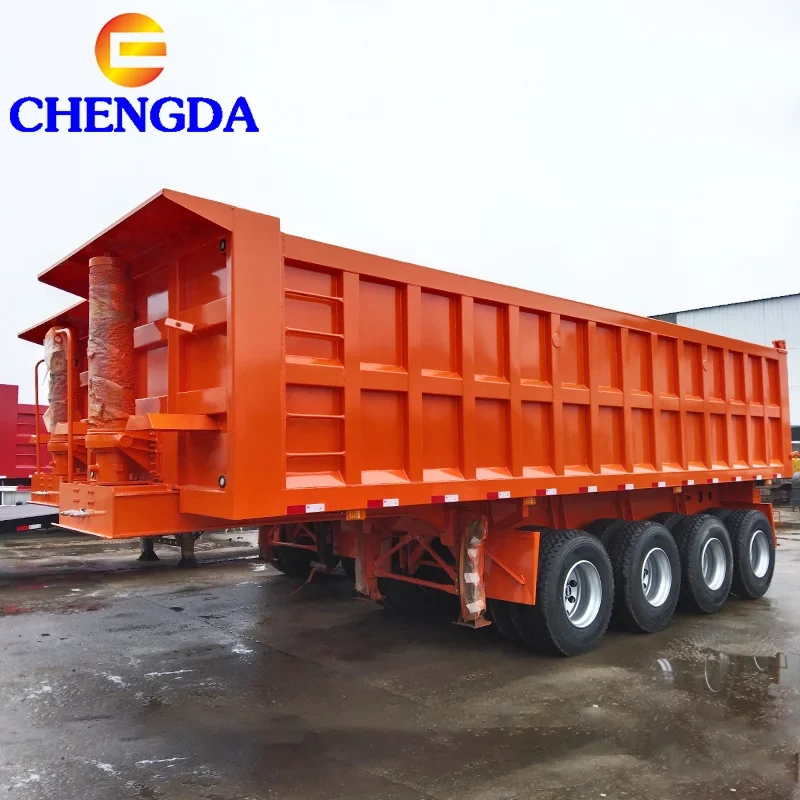
The professional export sector that has developed since then operates on an entirely different basis. Established exporters — Shandong Chengda Group, for example, founded in 2005 and certified as a National High-Tech Enterprise — maintain direct procurement relationships with multiple OEMs including Sinotruk, Shacman, FAW, Foton, and XCMG. They conduct independent pre-shipment inspections, supply full export documentation packages, and actively encourage prospective buyers to visit production facilities before placing orders.
For the African importer, the practical difference is this: dealing with a factory-linked exporter means there is a real organization standing behind the product, with a business reputation and ongoing customer relationships to protect. That fundamentally changes the risk profile of the transaction.
5. One Supplier, One Shipment — The Efficiency of Consolidated Procurement
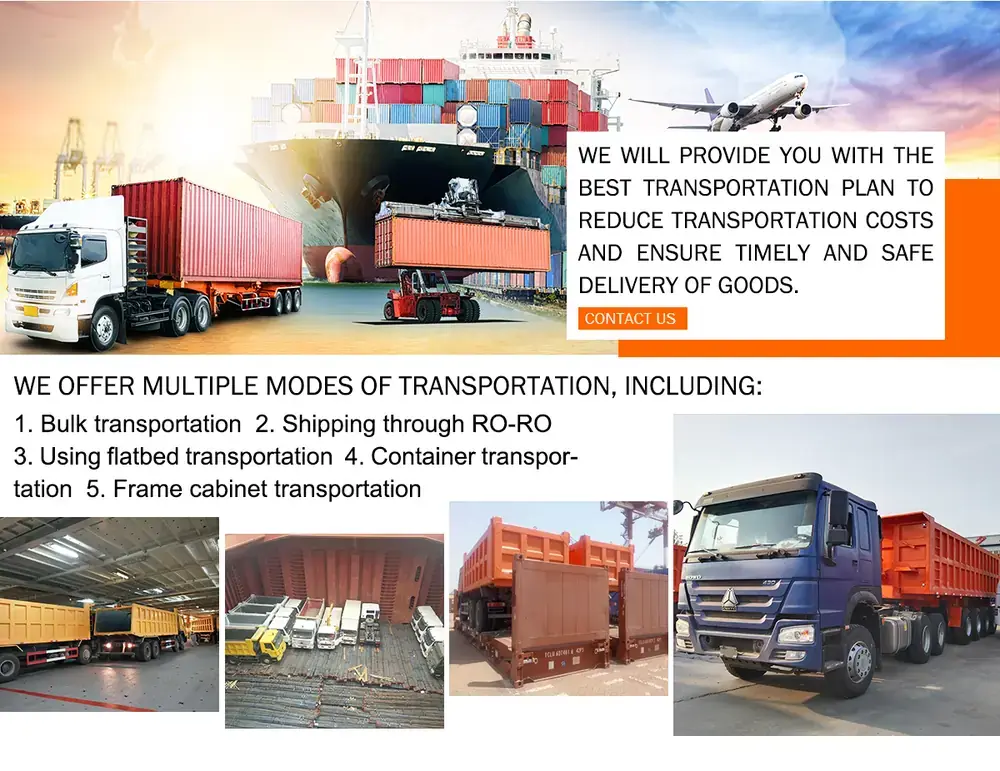
Consider the equipment needs of a typical mining or civil construction operation. The project might require dump trucks for material haulage, a lowbed trailer for moving excavators, a fuel tanker for on-site refueling, a water bowser for dust suppression, and possibly a concrete mixer. Sourcing each category from a different manufacturer — potentially in different countries — creates a cascade of logistical challenges: multiple shipping schedules to coordinate, separate sets of customs documentation, and fragmented after-sales support.
The consolidated procurement model that leading Chinese exporters offer eliminates much of this complexity. A single supplier can assemble the full equipment package — trucks, semi-trailers, tankers, machinery, and spare parts — under one contract, loaded into one coordinated shipment with unified paperwork. After delivery, the buyer has a single point of contact for technical support, warranty claims, and parts reordering. The time and administrative cost saved by this approach is significant, and for project managers working to fixed timelines, it can be the deciding factor.
In Summary
The growing presence of Chinese heavy-duty vehicles in African markets is the combined result of several reinforcing trends: rising product quality, improved parts distribution, engineering adapted to local operating conditions, the maturation of professional export channels, and supply-chain efficiency. No single factor would have been enough to drive the shift on its own. Together, they have reshaped the competitive landscape.
This does not mean Chinese trucks are the best choice for every fleet in every situation. Procurement decisions are shaped by financing arrangements, brand familiarity, maintenance team expertise, and local resale market dynamics — all of which vary by country and by business. But for a large and growing share of the African market, the practical case for Chinese heavy-duty vehicles has become difficult to dispute, and the direction of travel is clear.